Where the humidity is high, the vibes are weird, and the mushrooms are plotting something.
Welcome to The Fungal Jungle
This is the damp, slightly feral corner of Cattywampus Farm where things grow because I dared them to (but, like, sometimes they call my bluff). It’s humid, it’s unpredictable, and half the time I’m convinced the mushrooms are running their own union meetings in the dark.
If the Pepper Zone is where battles are fought, The Fungal Jungle is where experiments happen – sometimes glorious, sometimes disastrous, always interesting.
How It All Started
One day – early in my unemployment spiral – we were grocery shopping. I wanted baby bella mushrooms for supper. They were stupidly expensive. I looked at my husband and said, “At this price, we should grow our own.”
And that was it. That was the moment the Fungal Jungle sprouted.
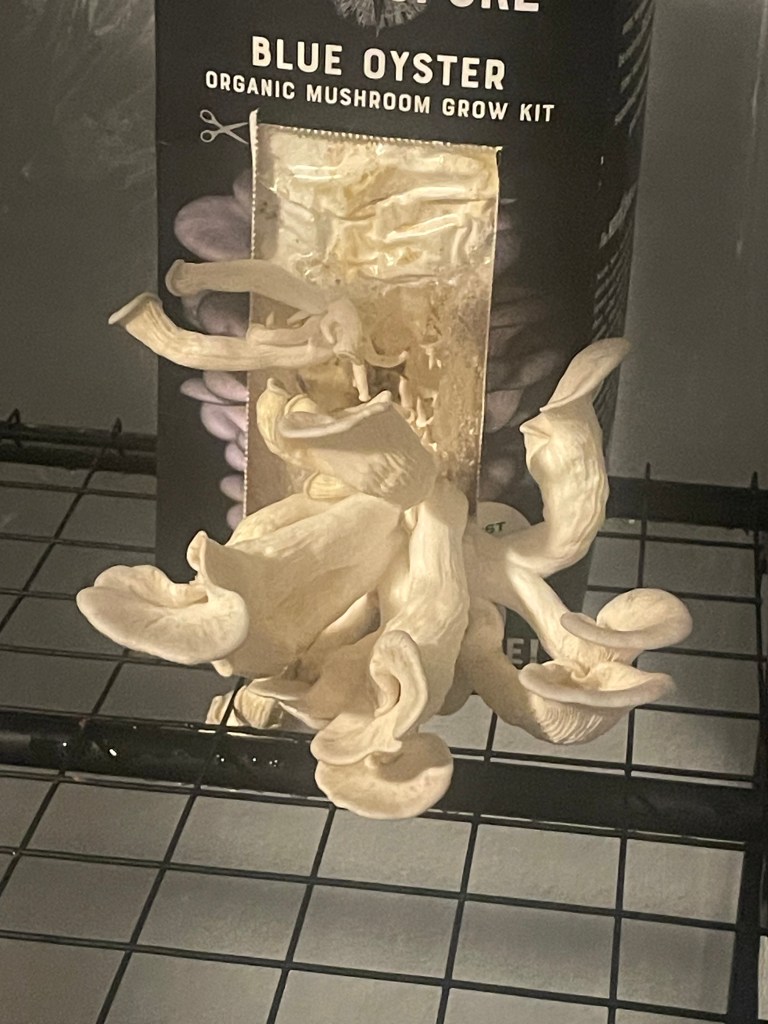
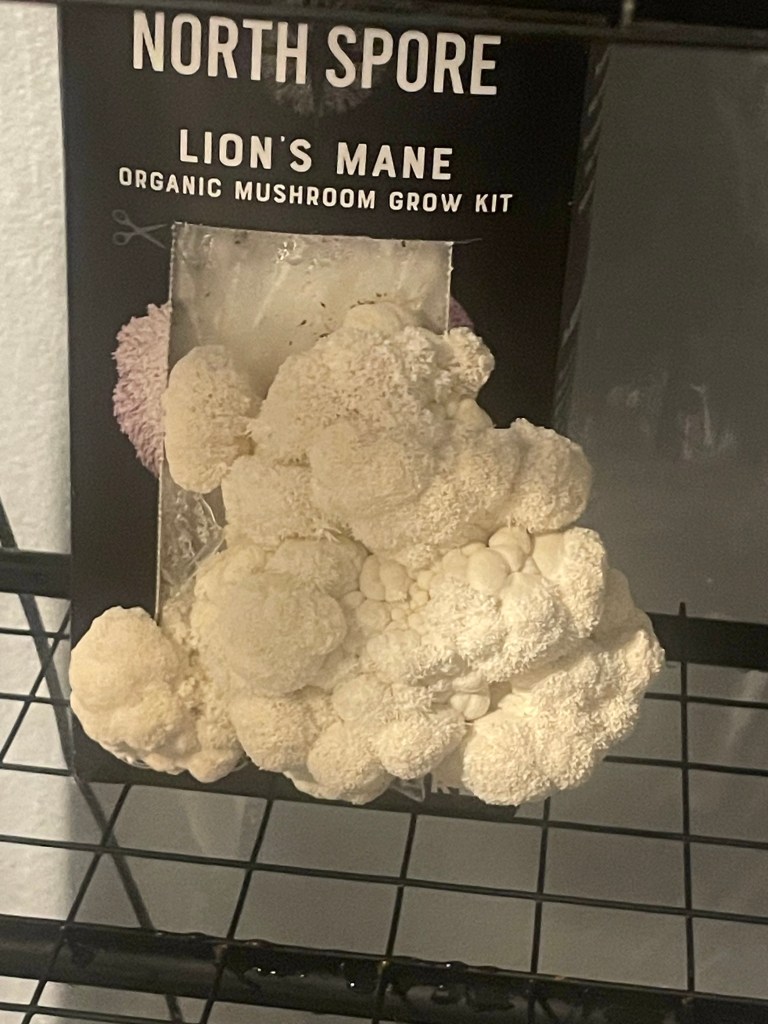
I ordered North Spore lion’s mane and blue oyster kits like I knew what I was doing because I watched an ad and felt super confident. Spoiler: I did not know what I was doing.
The First Boom Room (A Tragedy in Canvas)
I bought a little Vivosun grow tent and tried to DIY a boom room. I tore the canvas. I patched it with duct tape like a gremlin. I cycled the humidifier and fans, and set the sensors.
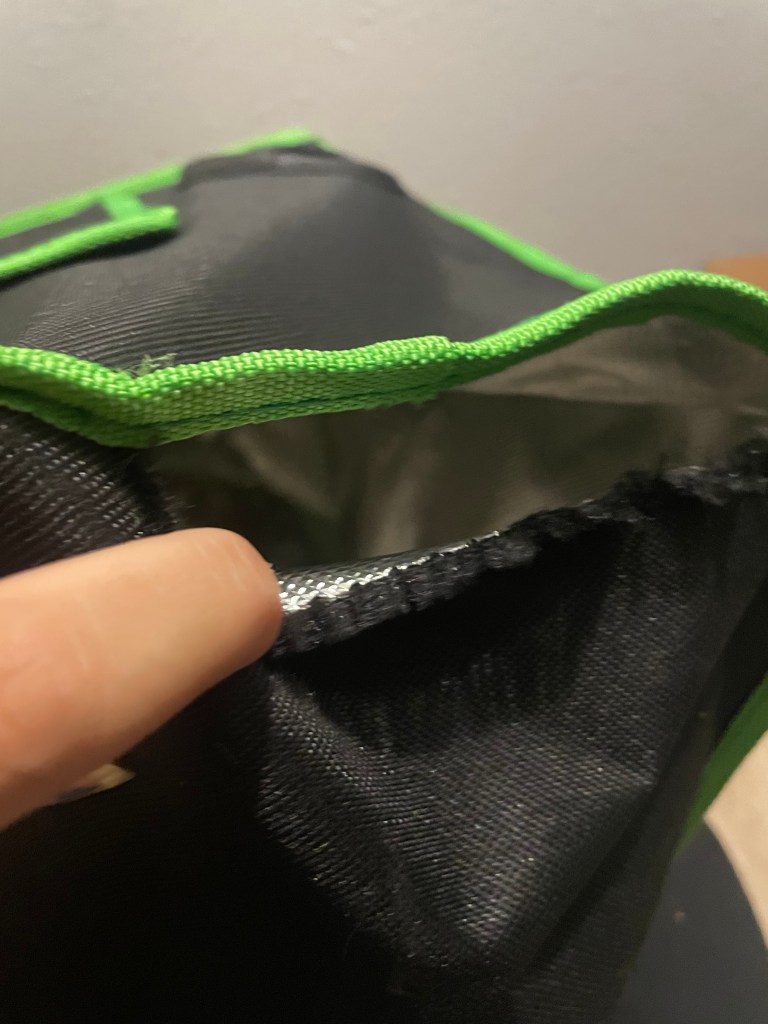
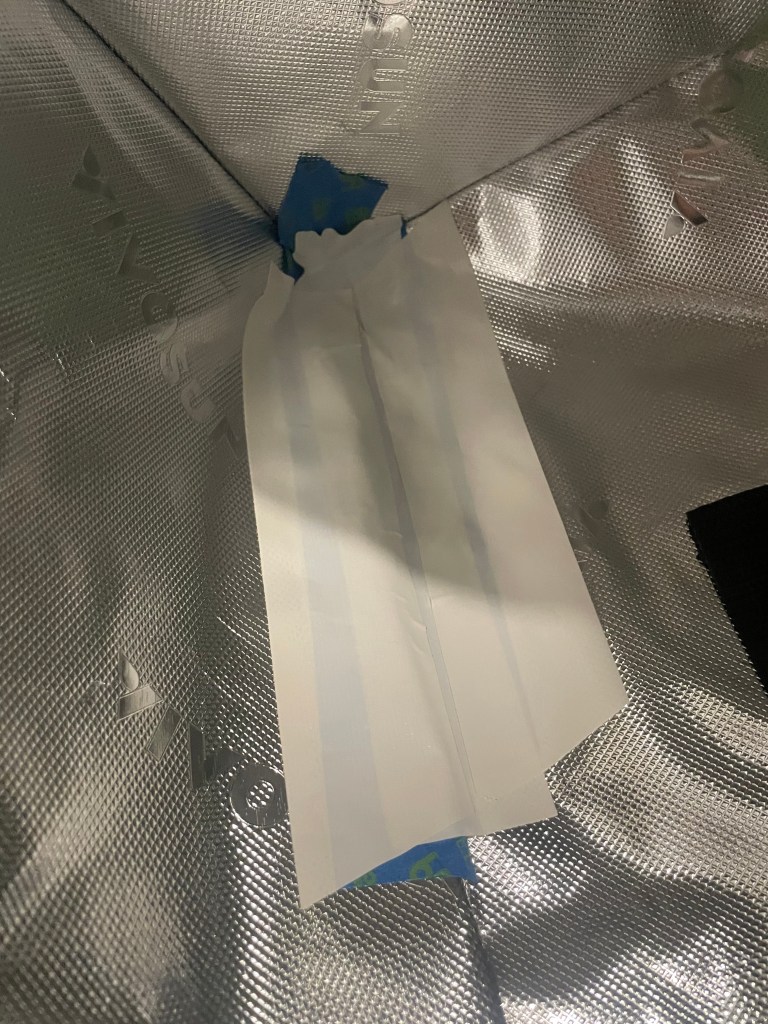
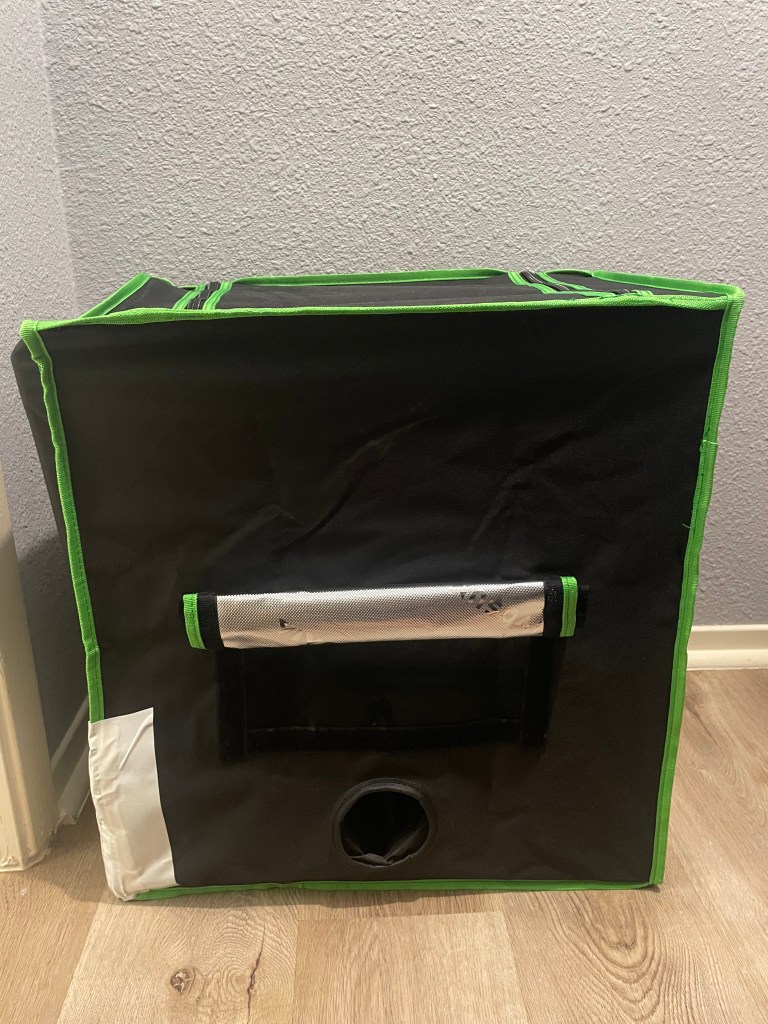
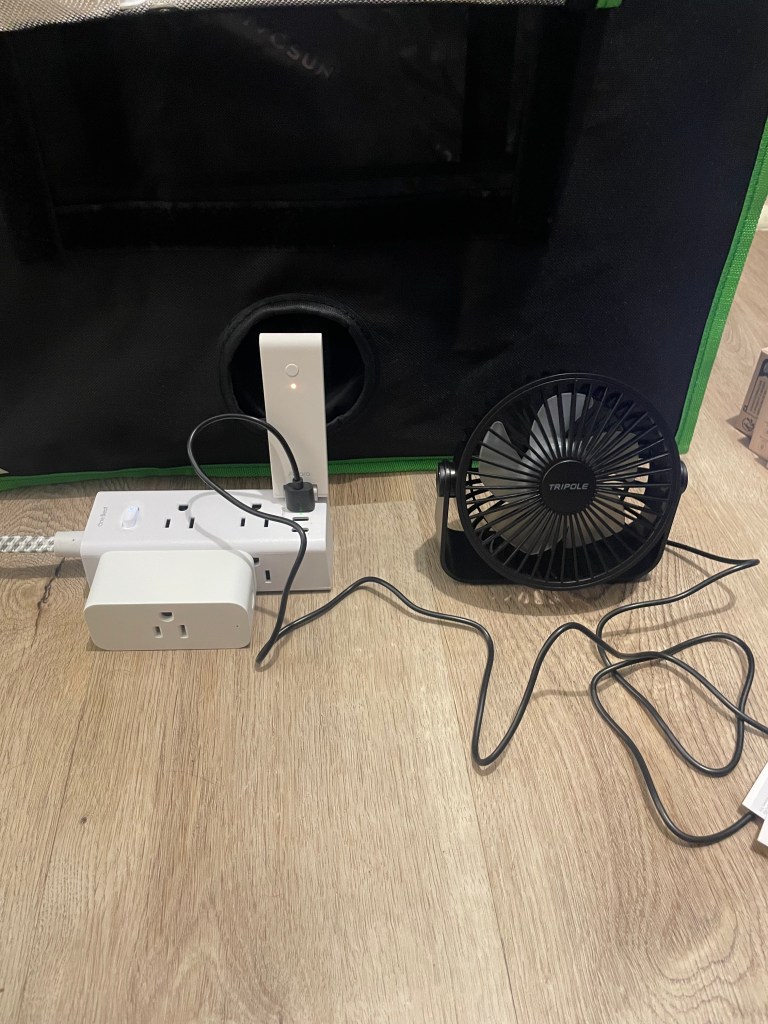
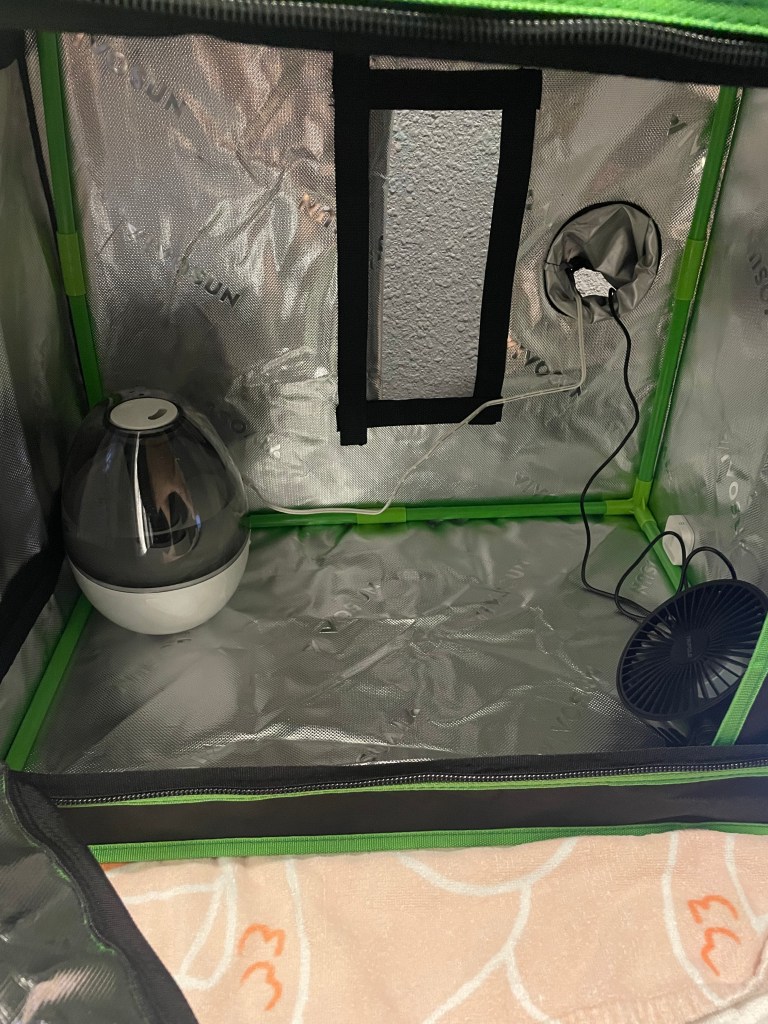
But, it was a disaster. A damp, mold‑adjacent, chaotic disaster. I couldn’t get the tent stable. It was either way the hell too humid (and dripping water onto the towel on the floor, or it was bone dry. the sensors kept shutting off becuase it was just too damp. I have no idea what the fan thought it was doing, but it was evidently doing nothing at all.
So, I gave up and bought the expensive boom room. I mean, I had already spent so much money and emotion on this and was in super deep. What was another stupid amount of money that I don’t have?
I set it up, and then suddenly everything started to work. Now? Now I’m psyched. Pretty fucking sure I’m going to botch the first several batches of dehydrating them – but psyched.
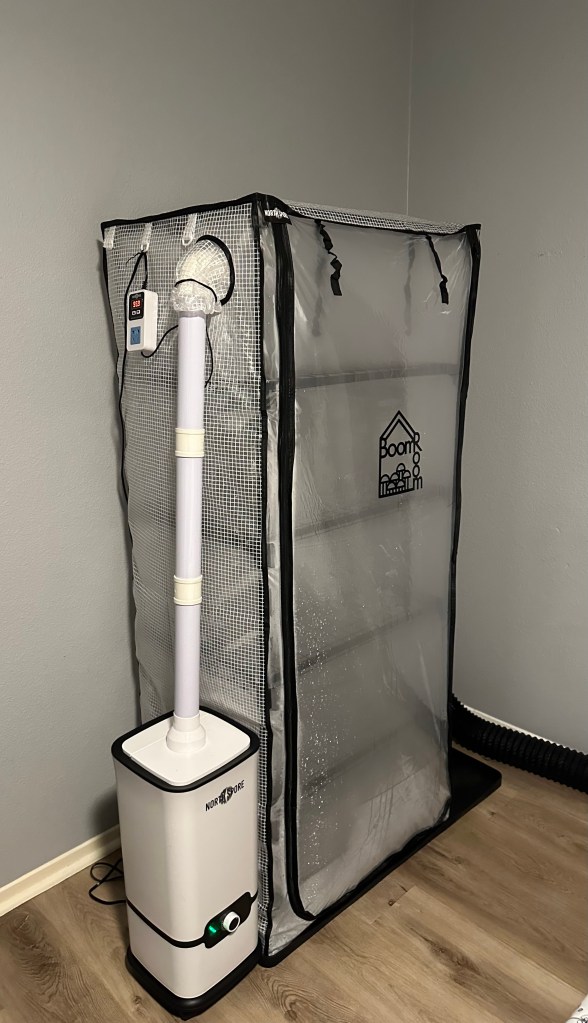
Well, it was too easy. Just too damn easy….
Well, Fuck Me Gently With a Humidifier Hose…
Growing mushrooms in a Martha tent has been one of the most unexpectedly challenging – and rewarding – things I’ve done at Cattywampus Farm. When I first set it up, I thought I was creating a stable, controlled environment where all my mushrooms could happily fruit together.
Reality check: the tent had other plans.
This summer taught me that a Martha tent is not a magic box. It’s a living, breathing micro‑environment that needs constant tuning, and I spent weeks wrestling with three major issues:
- Humidity that refused to stabilize
- CO₂ levels that swung wildly
- Heat spikes that pushed the tent to nearly 90°F inside my already‑hot house
There were two full resets as I tried (am still trying) to get everything under control, but I did manage to harvest mushrooms before everything went sideways. And those early successes are what kept me motivated through the troubleshooting that followed.
And now…before I put another damn block in there, I am going to monitor the tent for stabilization and water collection for another week. If all looks good…I’ll try again.
What’s Growing in Here
Lion’s Mane – the shaggy weirdos, but my goodness they taste good!
Blue Oyster — the dramatic ruffly ones. I haven’t these yet, but I’m so excited to try them!
Each one has its own personality, its own humidity demands, and its own way of making me question my life choices.
How I Grow Them
The boom room hums like a tiny biome. Humidity: 85–95% Airflow: constant negotiation Light: moody and indirect Me: pacing around like a worried parent. But before all that happened….the programming.
Okay, let me tell you how this worked for me. The humidifier does not have a timer, so I had to spend a day doing a bunch of trial and error with intervals to figure out what would keep the tent at a steady 90 – 95% throughout the day. Finally (FINALLY) I found the interval that was right for me. Cool! So, now to program.
My timer is an amazon smart plug and it works with Alexa, which is great. What is not great is that in order to create a cycle for my humidifier I had to create a routine. For. Every. Single. Cycle. I started this whole thing at 6 am, and I had a goal to automate everything before I went to bed. That finally happened at, like, midnight. I can’t remember. It was a long day.
But they are in and growing. I want to show you what a difference 24 hours make. Enjoy!
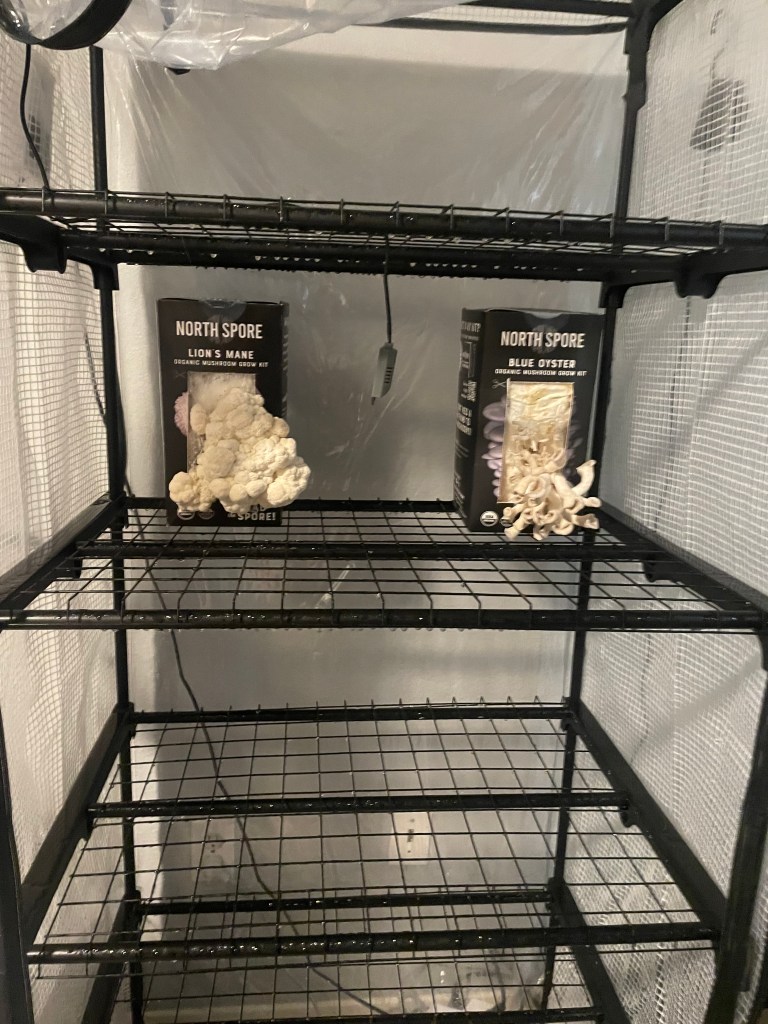
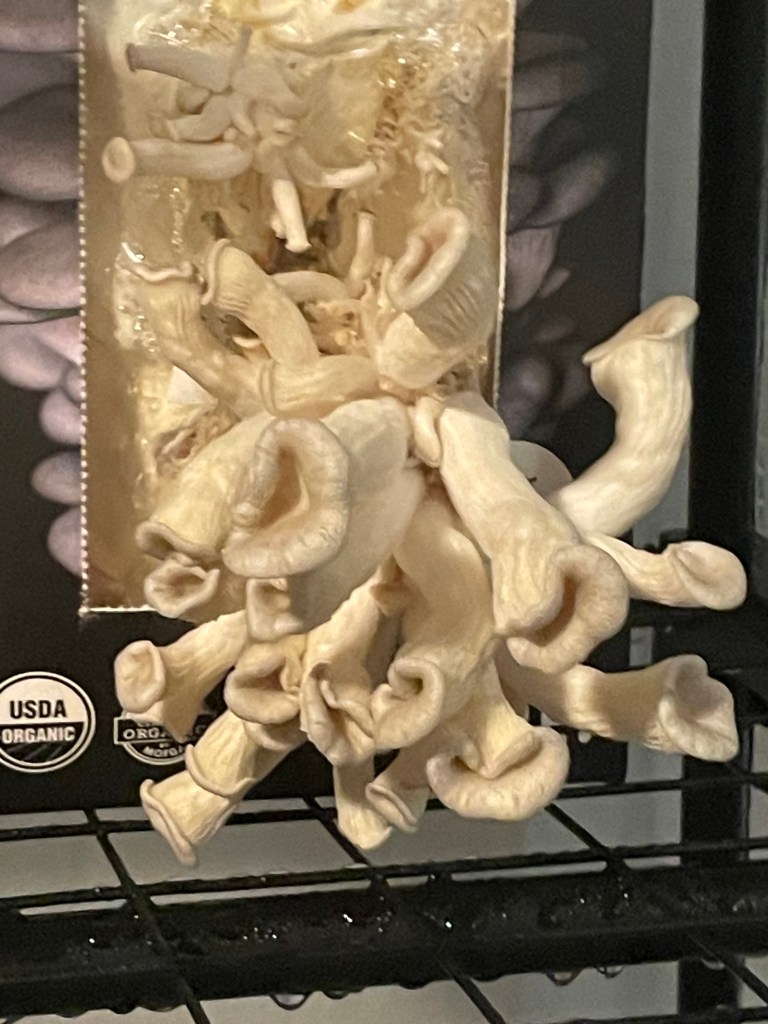
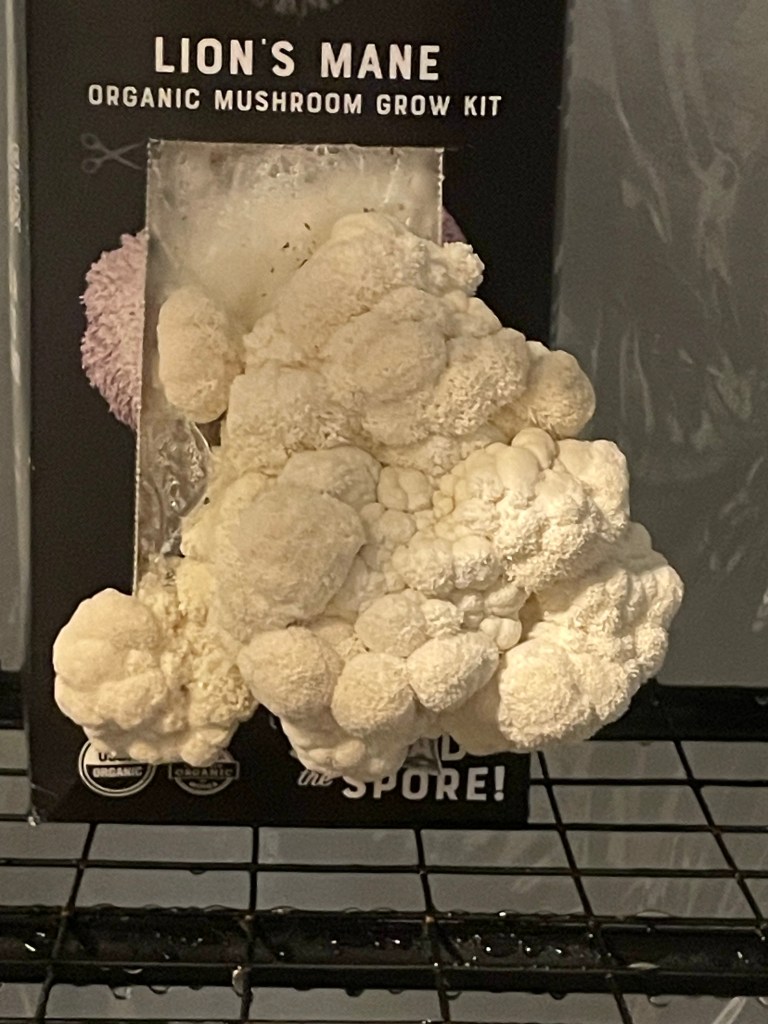
Well, Bless My Heart… I Was Wrong.
I went back and reread that post where I was all proud of myself for “dialing in” my Martha tent — humidity cycles, airflow, the whole nine yards — and honestly, bless my heart. Two‑weeks‑ago me really thought she had cracked the code. She was cute. She was determined. She was also completely wrong.
Because here’s what I’ve learned since: a Martha tent is not some magical, all‑purpose mushroom habitat. It’s more like a fussy little ecosystem with opinions. And every mushroom species has its own needs, its own quirks, and its own preferred climate. Trying to grow everything at once in the middle of a Texas summer was… well, it was a choice.
Lion’s Mane wants high humidity and gentle airflow. Oysters want fresh air like they’re training for a marathon. Chestnuts want stability and lower CO₂. Shiitake wants cooler temps and absolutely no wet surfaces. Pioppino wants cool air and consistency.
Meanwhile, my house was hovering around 85–90°F inside, and the tent was pushing 90°F by mid‑afternoon. Humidity was bouncing around like a toddler on a sugar high. CO₂ levels were doing whatever they wanted. And then came the morning I found slimy goo coming out of the humidifier hose – which was the universe’s way of telling me I did not have a maintenance plan and should’ve been using distilled water from the start.
So yes, I’ve learned a lot. Mostly that you can’t just toss a bunch of mushroom blocks into a tent and expect them to behave. The environment has to match the mushroom, not the other way around. And that means planning grows by species, adjusting settings, cleaning between runs, and accepting that some mushrooms simply won’t fruit well in August in Texas, no matter how optimistic I am.
The good news? I did manage to harvest mushrooms before everything went sideways. And honestly, that tiny win is what kept me from dragging the whole tent out to the yard and letting the sun finish it off.
What I Wish I’d Known
Y’all… here are the things I wish I had known – or even thought to ask – before I ever put a single mushroom block in that Martha tent. And yes, I know, I could’ve done all this research first. But I didn’t. So here we are.
- Stabilize your tent before you grow anything. Figure out the temperature and humidity you can realistically maintain in your house first, then choose mushrooms that actually tolerate those conditions. Not all mushrooms will fruit in the same environment, and certainly not in August in Texas.
- Know which mushrooms can grow together. Lion’s Mane, oysters, chestnuts, shiitake, pioppino – they all want different climates. Some want high humidity, some want tons of fresh air, some want cooler temps. A Martha tent is not a “one climate fits all” situation.
- Maintenance is not optional. Humidifiers need cleaning. Hoses need checking. Filters need rinsing. Distilled water is your friend. If you skip maintenance, you will eventually wake up to something slimy and concerning coming out of a tube.
- Daily monitoring and adjusting is just part of the deal. Humidity swings. CO₂ drifts. Airflow shifts. The tent is basically a toddler with buttons – you have to check on it every morning and sometimes again in the afternoon.
- Water pooling is not normal. If you see puddles forming anywhere, something is off. Fix it immediately. Mushrooms do not want to sit in a swamp, and your tent definitely doesn’t.
- Heat matters more than you think. If your house is hot, your tent will be hotter. Some mushrooms simply will not fruit above certain temps, no matter how optimistic you are.
I’m sure this list isn’t complete. I have plenty more blocks to mess up and learn from, so stay tuned — I’ll be adding to this as the tent continues to humble me.
The Martha Boom Room II (My Official Upgrade)
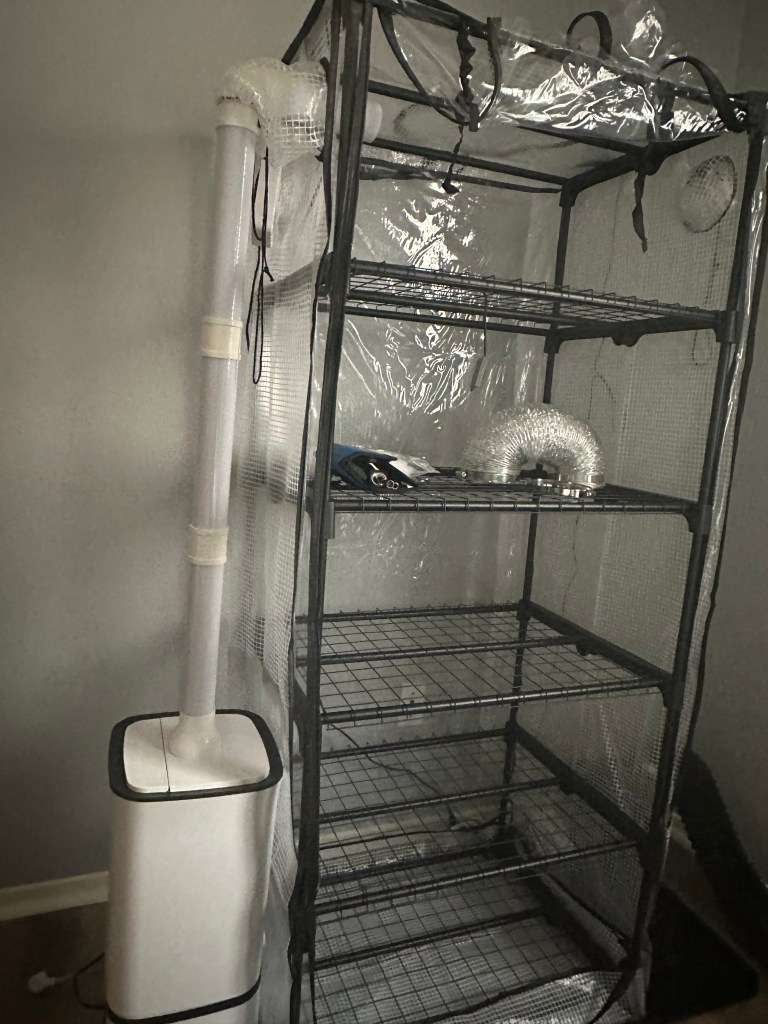
After the tragic Vivosun DIY boom room attempt – torn canvas, duct tape patches, humidity swings that felt like mood swings – I finally bought the Martha Boom Room II. And listen… this thing changed everything.
My Takeaways:
- SUPER easy to assemble. Like, suspiciously easy. I expected a fight. It was chill.
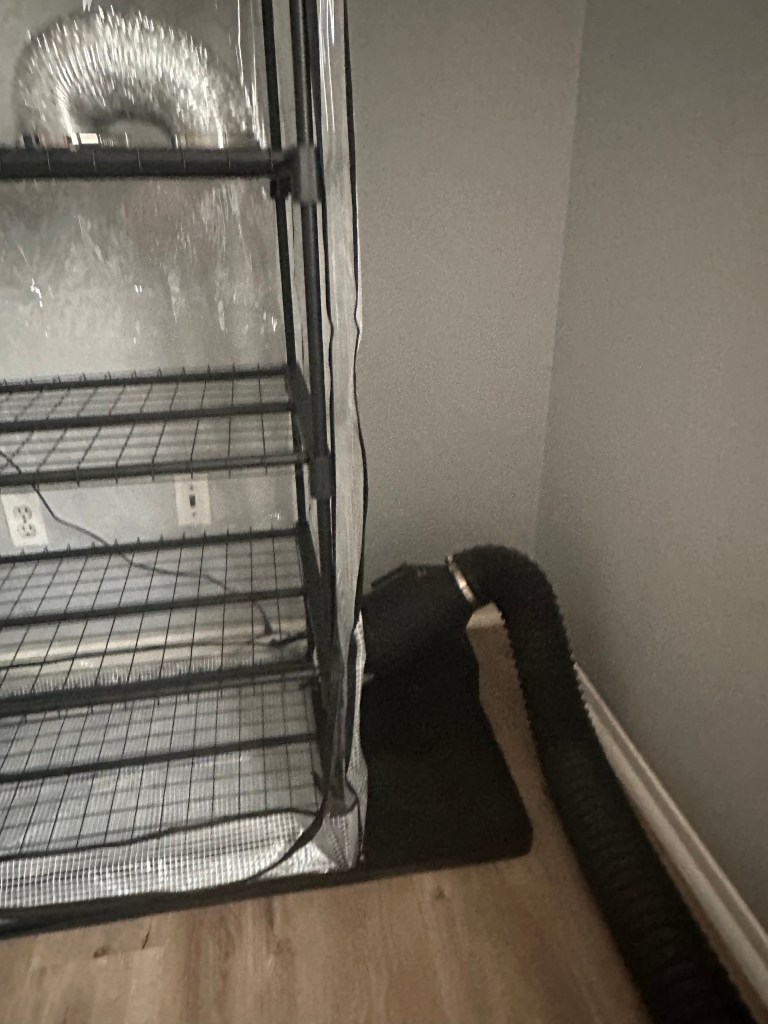
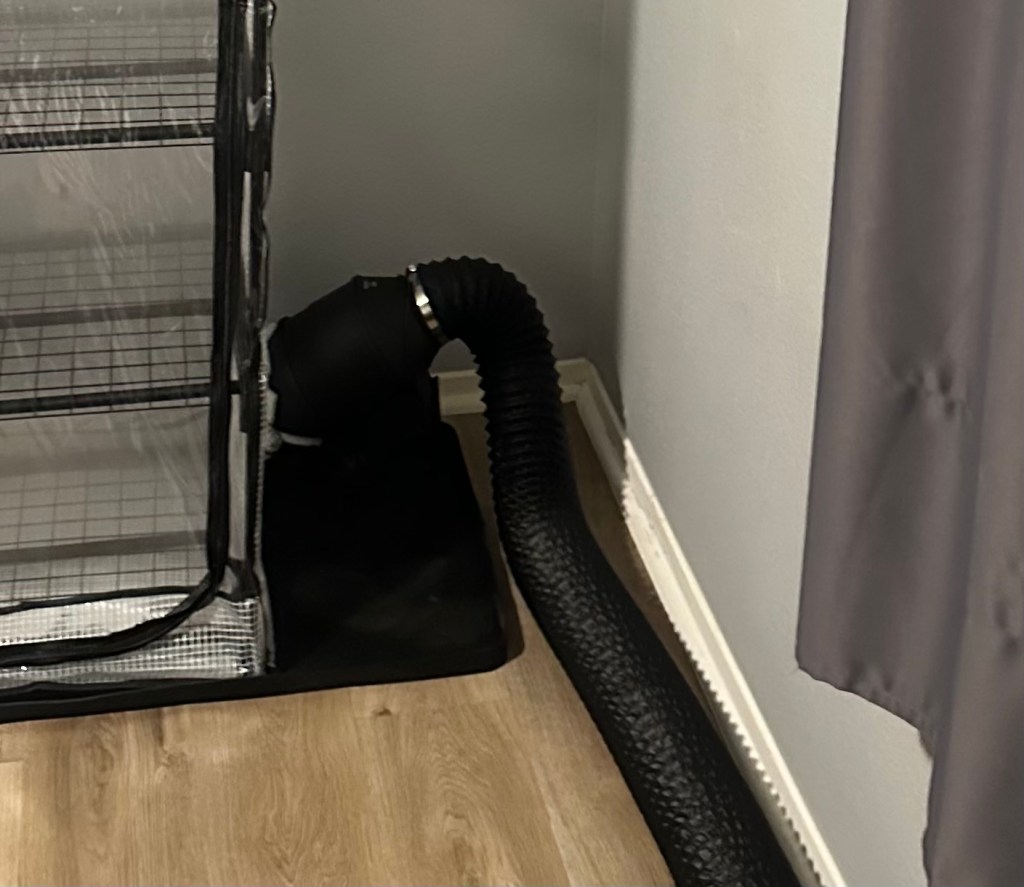
- Ventilation was a breeze. My husband (jack of most trades, master of “give me 10 minutes and a drill”) vented it out our window without drama. We did have to add extra ductwork because the tent sits close to the window, but it wasn’t a big deal.
- The humidifier was the only chaos gremlin. The humidifier, sensor, and fan all come in separate boxes with their own instructions. The humidifier’s “instructions” were basically a diagram and a “good luck, champ.” But we treat building IKEA furniture like an Olympic sport, so we figured it out.
Once everything was connected, the Martha Boom Room II became the beating heart of The Fungal Jungle – stable humidity, good airflow, predictable cycles, and no duct‑tape‑patched canvas flapping in the breeze.
If you want to check them out, I recommend exploring their site (click here!) because it’s beautifully designed, easy to navigate, full of great products and information for someone like me. Who knows nothing.
How to Use Fresh Mushrooms
- Tear lion’s mane into chunks
- Slice oysters gently
- Sauté low and slow
- Treat them like the delicate weirdos they are
Fresh mushrooms are tender, absorbent, and dramatic. They reward patience.
How to Use Dried Mushrooms
This is where the dehydrator comes in – and where I fully expect to screw up before I get good. I’ll create a whole other page on that once I get a sense of what the hell I even need to do.
Dried mushrooms are:
- shelf‑stable
- perfect for powders
- incredible in broths
- the backbone of my future soup kits
Rehydrate them in warm water, save the broth, and use them anywhere you want depth.
The Mushroom Library – Under Construction!
This section will hold (but currently does not because I’m not even close to that yet):
- QR‑linked guides
- recipes
- troubleshooting
- grow logs
- dehydrator notes
- product development updates
Everything mushroom‑related lives here.
 cattywampusrumpusfarm.com