I’ve been avoiding writing about the squash and zucchini because, frankly, they look like they’ve been through something. And by “something,” I mean me. These poor squash and zucchini seedlings are leggy, pale, stretched, confused, and absolutely not thriving. They look like they’ve been raised indoors by someone who meant well but got distracted by strawberries, unemployment, and existential dread.
Which… is exactly what happened.
I kept telling myself I would pot them up “tomorrow.” And then tomorrow became the next day, and the next day, and suddenly these poor seedlings were still in their tiny cups, leaning dramatically to one side like Victorian children with fainting disorders.
So today became the day I finally admitted: These plants are dying because I am lazy.
There. I said it.
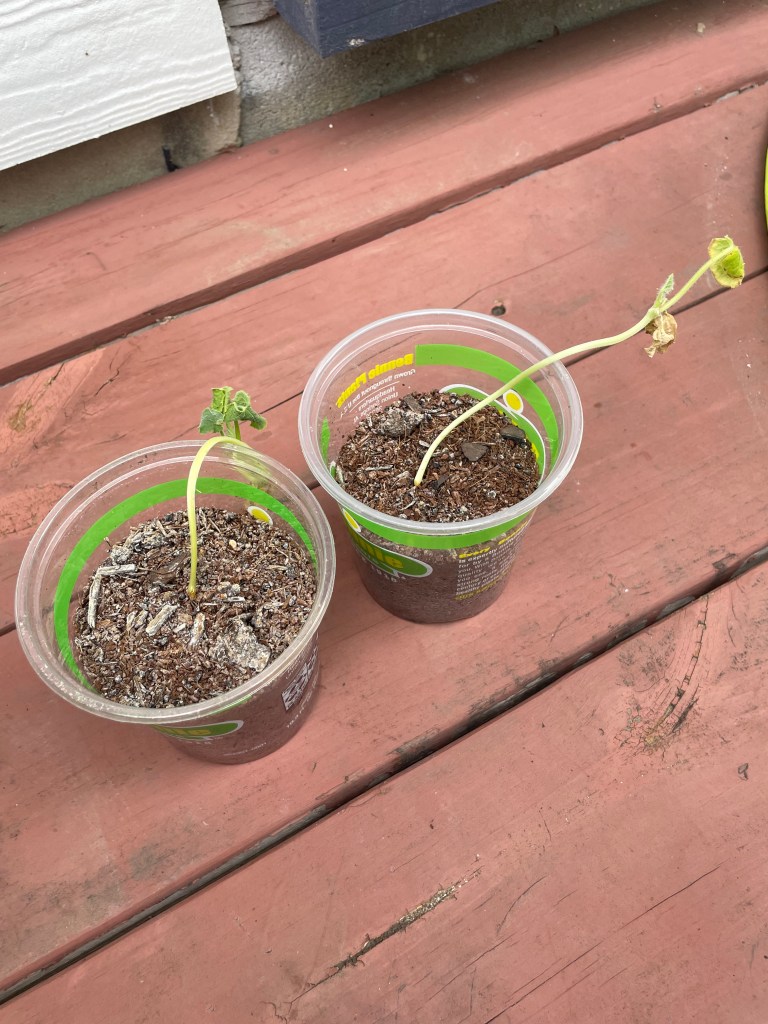
Leggy squash and zucchini seedlings leaning in small starter cups.
Act I: The Leggy Little Monsters
When I picked up the cups, the stems were so long and thin they looked like they were trying to escape. They had that “I’m doing my best but please help me” posture that only leggy seedlings who have been neglected for too long can achieve.
They weren’t just leggy. They were floppy. They were bendy. They were one stiff breeze away from snapping in half.
And yet, somehow, they were still alive. Barely. But alive.
Act II: The SVB Fear Spiral — Because Texas Gardening Is a Horror Film
As if the seedlings weren’t already struggling, I also live in central Texas – which means squash vine borers (SVB) are basically lurking behind every corner like tiny, winged serial killers. I’m still traumatized by losing my first zucchini and squash plants to these little buggers.
Every time I look at a squash plant now, I can practically hear the Jaws theme.
So now I’m not just dealing with leggy seedlings. I’m dealing with leggy seedlings who are about to be thrown into a world full of predators they are absolutely not prepared for.
My plan — and I use that word loosely — is to fortify them like medieval peasants preparing for war:
- mesh insect cages
- aluminum foil collars
- daily inspections
- immediate execution of any suspicious larvae
Will any of this work? I have no idea. But it makes me feel like I’m doing something to protect them from squash vine borers, and that counts for a lot right now.
Act III: The Great Burying — Fixing Leggy Squash & Zucchini Seedlings
The one thing I do know is that squash and zucchini can root along their stems, which is basically the only reason these leggy disasters still have a chance. So the plan is to bury these stretched-out necks up to their chin and hope they decide to grow roots instead of giving up on life.
(And honestly, I get it little guys; doing the hard work to establish yourself somewhere new is exhausting.)
I gently lowered each seedling into its new grow bag, added soil around the stem, and whispered, “I’m sorry, please grow!”
They’ll probably root — burying leggy squash and zucchini seedlings usually works — but will they thrive? I mean… maybe. And if they don’t, I will absolutely blame myself and try again.
Oh, and just for the hell of it, I threw in a seed of zucchini and squash into the grow bags….may the strongest seed win!
Act IV: The Reality Check
Here’s the truth: I should have transplanted these seedlings weeks ago. I know that. You know that. The plants definitely know that.
I’m trying to figure out gardening at the same time I’m trying to figure out my life, and sometimes things slip through the cracks. Sometimes those things are squash seedlings.
Act V: The Plan Going Forward – AKA Hope, Mostly Hope
Now that they’re finally in real soil, the plan for rescuing these leggy squash and zucchini plants is simple:
- keep them shaded for a day or two
- water deeply
- protect them from SVB like my life depends on it
- hope the stems root
- hope the leaves perk up
- hope I didn’t wait too long
Basically: hope. Lots of hope. The official gardening strategy of Cattywampus Farm.
 cattywampusrumpusfarm.com